
Eco-Friendly Bin Cleaning in North Kingstown: Clean Trash Bins
What Makes a Bin Cleaning Service Eco-Friendly
Real eco-friendly bin cleaning means the dirty water gets captured, not sprayed into your yard or the storm drain. It also means using hot water to cut grime instead of leaning on harsh chemicals. If a company can't tell you where the wastewater goes, that's your answer.
Here's the thing nobody tells you. A lot of bin cleaning trucks just blast your can and let the dirty water run wherever it wants. It goes right into the storm drain or into the grass. That water is loaded with bacteria, grease, and whatever else was rotting in your trash. It doesn't belong in the ground.
Our setup is self-contained. Every drop of wastewater gets captured by the machine itself, so nothing runs off onto your driveway or lawn. We rely on 190 degree water to break down grime and kill bacteria, instead of dumping in heavy chemicals. Hot water does the heavy lifting. That's a big part of what eco-friendly bin cleaning is supposed to mean
So what should you ask before hiring anyone for this?
Where does the wastewater go during and after the clean
Is the equipment self-contained or does it drain onto the ground
What temperature is the water, and is that doing the work instead of chemicals
Do they use bleach or industrial cleaners, or hot water and sanitizing agents
We hear this a lot. Folks assume any bin cleaning truck is eco-friendly just because it's outside and uses water. It's not that simple. If the runoff pools in your yard, that's not eco-friendly. That's just outsourcing a mess. The equipment and the process matter more than the label on the truck
Ready to get your bins cleaned?
Signs Your Trash and Recycling Bins Need Cleaning
Open your bin lid on trash day and take a whiff. If you step back a little, that's your answer.
Most bins don't need a garden hose rinse. They need something stronger. Rhode Island summers get sticky and humid. That heat speeds up bacteria growth inside a closed plastic bin faster than most folks expect. A few days of sitting juice from chicken packaging or a leaky trash bag is all it takes.
A smell that hits you before you even lift the lid
Sticky residue or a film coating the bottom and sides
Flies or gnats hanging around your bin even when it's empty
Mold spots or a slimy texture near the drain holes
Stains that don't go away no matter how many times it rains
Recycling bins get overlooked a lot, too. People figure it's just cans and paper, so it can't be that dirty. But spilled soda, sour milk cartons, and juice bottles leave behind sticky sugar residue. This attracts pests just as fast as trash does.
If you're asking yourself whether it's bad enough to call someone, it already is.
Not every bin needs a deep clean right away. If yours just smells a little plastic-y or has some dust from yard debris, a hose and some dish soap will handle that fine. Save the call for when soap and water stop making a dent.
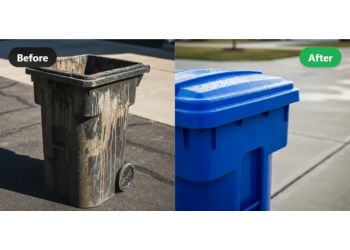
When Homeowners Can Skip Professional Bin Cleaning
Let's be real for a second. Not everyone needs us.If you just moved into a new place and the bin is basically brand new, you don't need a deep clean yet. A quick hose-off and some dish soap will handle light dust or a spilled soda. Same goes for a bin you already scrub down weekly with your own hose. If you're keeping up with it and there's no smell, no film on the walls, and no bugs hanging around the lid, you're doing fine on your own.
Some North Kingstown folks with smaller households and mostly dry trash (think paper and cardboard from a home office) just don't build up much grime between pickups. Their bins stay pretty manageable with a garden hose and a Saturday morning.
But if you've got a family of five, seafood shells from a summer cookout, or diapers going out weekly, that's a different story. Regular household water pressure and a bottle of soap can't touch baked-on grime once it's had a few 90-degree days to cook. That's usually when people call us.
So take a look inside your bin before you book anything. Tilt it, check the walls, give it a sniff. If it's mostly clean and just needs a rinse, grab your hose and handle it yourself this weekend.
How Professional Bin Cleaning Works From Curb to Curb
Here's the part people always ask about. How does this work at my house? Folks picture a hose and a bucket in their driveway. Not even close.
We build our schedule around your regular trash pickup day. That's on purpose. It means your bins are already empty and sitting at the curb. So we don't need you home and we don't need access to your yard
Our crew rolls up in the bin blasting truck on your scheduled cleaning day, right after pickup.
Each bin gets loaded and hit with water heated to 190 degrees, inside and out.
The high-powered spray breaks up the grime and bacteria stuck to the walls and lid.
All the dirty runoff gets captured right inside our equipment. None of it hits your driveway or your lawn.
We set the bin back at the curb, clean and ready to roll back to wherever you keep it.
That's it. No mess left behind. No wet spot on the pavement. No smell drifting into your garage. You don't have to lift a finger for any of it. Alot of customers worry the water will just wash the grime into their yard instead of cleaning it. It won't. The whole system is self-contained. That's the whole point of running it this way.
If you've got a recycling bin that needs the same treatment, we handle that on the same visit. One stop, both bins done. You're back to your normal routine by the next morning.
How Bin Cleaning Pricing Structures Work
Most bin cleaning companies price around a few things: how often you want service, how many bins you're getting cleaned, and whether it's a house or a business with a whole row of dumpsters out back. Monthly plans usually cost less per visit than a one-time cleaning. That's just how routes work. A crew already driving down your street to hit ten other houses can fold you in without much extra cost. A single one-off visit means someone's making a special trip just for you.
So the schedule you pick matters more than people think. Quarterly bin cleaning spreads the cost out but leaves more time for buildup between visits. Monthly bin cleaning keeps things tighter and usually runs cheaper per visit because it's part of a set route. One-time bin cleaning makes sense for move-ins, after a bad spill, or before a big event. But it won't carry the same value as a subscription.
Bin count changes things too. One bin is one bin. Add a recycling bin cleaning on top of your trash can cleaning, and most companies will bundle them together rather than charge two separate visit fees. HOA bin cleaning and neighborhood bin cleaning routes work on a different scale entirely. A whole street or complex getting serviced on the same day cuts down on drive time and setup.
Several things speed up how fast odor builds in your bins:
Ask if pricing is per bin or per visit
Ask whether recycling bins cost extra or come bundled with trash bins
Ask how the schedule affects the rate: monthly versus quarterly versus one-time
Ask if there's a discount for multiple bins or a whole HOA signing up together
None of this is complicated once you know what to ask. It's just math around driving, water, and how many bins get touched in a day.
Our Service Areas
We proudly provide our premier bin cleaning services to communities across Southern Rhode Island. Check if we're in your neighborhood!
Warwick
Narragansett
Newport
North Kingstown
Westerly
South Kingstown
Jamestown
Charlestown
East Greenwich
Frequently Asked Questions
What makes bin cleaning eco-friendly?
Real eco-friendly bin cleaning captures the dirty wastewater instead of letting it run into your yard or storm drain. It also uses hot water, around 190 degrees, to break down grime instead of harsh chemicals. Before you hire anyone, ask where the wastewater goes and whether their equipment is self-contained. If a company can't answer that clearly, that tells you they're just spraying your bin and letting the mess run off. The truck and process matter more than the label.
How do I know if my bin needs professional cleaning?
If a smell hits you before you even lift the lid, that's a clear sign. Look for sticky residue, flies hanging around an empty bin, or mold near the drain holes. Rhode Island's humid summers speed up bacteria growth inside closed plastic bins fast. A few days of leftover juice from chicken packaging can cause this. If soap and water stop making a dent, it's time to call for a deeper clean.
Can I just clean my own bin with a hose instead of hiring someone?
Yes, if your bin is fairly new or you already rinse it weekly, a garden hose and dish soap usually works fine. Households with mostly dry trash, like paper and cardboard, often don't build up much grime between pickups. But a family of five with seafood shells or weekly diapers will hit baked-on grime that regular water pressure can't touch, especially after a run of 90-degree days. Check inside, tilt it, and give it a sniff before deciding.
Do I need to be home when my bins get cleaned?
No, you don't need to be home at all. We schedule cleanings around your regular trash pickup day, so your bins are already empty at the curb. Our crew loads each bin into the truck, blasts it with 190-degree water inside and out, and sets it back at the curb when it's done. You won't need to give us yard access or lift a finger.
Will bin cleaning leave a mess in my driveway or yard?
No, because the whole process is self-contained. Every drop of dirty runoff gets captured inside our equipment during the clean, not sprayed onto your driveway or lawn. This is one of the biggest worries people have before booking, since a lot of bin cleaning trucks just let the water go wherever it wants. Our setup is built specifically so none of that grimy water hits your property.
Do recycling bins need cleaning too, not just trash bins?
Yes, recycling bins get just as dirty as trash cans, even though people often skip them. Spilled soda, sour milk cartons, and juice bottles leave behind sticky sugar residue that attracts flies and gnats fast. It's easy to assume cans and paper can't get that messy, but the residue builds up the same way trash does. If your recycling bin smells or feels sticky inside, it needs the same deep clean as your trash can.
North Bin Blasting LLC is a professional trash bin cleaning service dedicated to keeping your cans fresh, sanitized, and odor-free.

Quick Links
Business Hours
Mon - Fri: 7:00 AM - 7:00 PM
Sat: 7:00 AM - 7:00 PM
Sun: Closed
© 2026 North Bin Blasting. All rights reserved. | Terms & Conditions | Privacy Policy
Site by Ashley Brown Marketing