
Residential Trash Bin Cleaning in North Kingstown

Why Bins in Coastal Neighborhoods Smell Worse and Faster
We hear it all the time from folks over in Wickford Village. "My bin smells awful and I just had trash pickup two days ago." That's not your imagination.
North Kingstown sits right on Narragansett Bay. The salt air and humidity here create a perfect storm for bin odor. Warm moisture speeds up bacteria growth inside your trash bin, and that process kicks into high gear between May and October. A bin that might stay tolerable for a week inland can turn rancid in 48 hours near the coast.
Here's what's actually happening inside your bin when humidity stays above 60 percent:
Food residue breaks down faster, producing sulfur compounds that smell like rotten eggs
Moisture trapped under the lid creates a greenhouse effect, raising the
internal temperature well above the air outside
Salt in the air corrodes small scratches in the plastic, giving bacteria more places to hide and multiply
Maggots and fly larvae thrive in warm, damp environments and can appear within a single day
According to the EPA, organic waste in enclosed containers can produce harmful bioaerosols when temperatures and moisture levels stay elevated. That's exactly the climate we deal with in North Kingstown for half the year.
And it's not just the smell. We've pulled bins off curbs near Quonset Point that had visible mold colonies growing along the interior walls. Black, green, sometimes white fuzzy patches. Once mold takes hold it doesn't go away on its own, the spores just keep spreading every time you open the lid.
So your weekly trash pickup removes the bags. But nobody removes what leaked, dripped, or splashed onto the bin walls. That residue bakes in the sun all week. Layer after layer, week after week. By midsummer you've got a bin that smells bad enough to hit you from ten feet away.
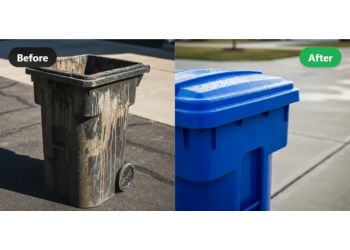
, the homeowner thinks the bin is just old and needs replacing. It doesn't. It needs a real residential trash bin cleaning with hot water and sanitizer to strip that buildup out completely. One cleaning resets the clock, you'd swear it was a brand new bin.
What the Hot Water Cleaning Process Actually Does
People ask us all the time if we're just spraying a hose into the bin. Not even close.
Our hot water bin cleaning process uses water heated above 190 degrees. That's hot enough to kill bacteria, break down grease, and dissolve the stuck-on gunk that's been baking inside your can for months. We see this every single week in North Kingstown, bins that look fine from the outside but are coated inside with a layer of rotting residue. The hot water does what cold water and dish soap never will.
Here's how it works when we show up at your curb:
We position your bin over our truck's collection system so all wastewater is captured. Nothing runs into the street or your yard.
High-pressure hot water blasts every interior surface of the can, top to bottom.
We hit the lid, the rim, and the exterior walls where grime builds up.
A deodorizing treatment goes in after the wash to neutralize any lingering smell.
Your bin gets set back at the curb, clean and dry within minutes.
The whole thing takes about three to four minutes per bin. You don't have to be home, you don't have to move the cans. We handle everything
.
So why does hot water matter so much? According to the CDC, temperatures above 170 degrees are effective at killing common bacteria like salmonella and E. coli. Our system runs well above that threshold. Cold water just pushes stuff around. Hot water actually destroys it.
And here's what most folks near Wickford Village notice right away. The smell is gone. Not masked with perfume or covered up. Gone. That sour, rotting odor that hits you every time you open the lid just disappears because we've removed what was causing it.
, one cleaning is enough to completely reset a bin that's never been washed. But regular service keeps it from ever getting that bad again.
Wastewater Containment and Environmental Compliance in Rhode Island
Here's something most people don't think about. When we clean your bins, all that grimy runoff has to go somewhere.
We capture every drop. Our trucks carry built-in wastewater containment systems that collect all the dirty water during the cleaning process. Nothing runs down your driveway into the street. Nothing flows into storm drains near Wickford Harbor or along the Post Road corridor. That matters more than you'd think, because storm drains in North Kingstown feed directly into Narragansett Bay.
Rhode Island has strict rules about this. The Rhode Island Department of Environmental Management requires that wastewater from commercial cleaning operations be properly contained and disposed of. We follow those rules every single day. It's not optional for us, it's how we built the business from the start.
So what's actually in that wastewater? More than you'd expect:
Bacteria from rotting food and animal waste
Chemical residue from household cleaning products tossed in the trash
Oils, grease, and organic matter that break down into harmful compounds
Trace amounts of pesticides from lawn care product containers.
All of that gets flushed off your bin during a hot water cleaning. And if a crew just lets it run into the gutter, it ends up in local waterways. We've seen other operations do exactly that. It's a shortcut we won't take.
Our eco-friendly bin cleaning process uses high-temperature water that does the heavy lifting. We don't rely on harsh chemicals to get results. The heat alone kills over 99 percent of bacteria, according to studies cited by the EPA. That means the wastewater we collect is already safer than what most people assume.
But we still contain it. Still dispose of it the right way.
You shouldn't have to worry about whether your residential trash bin cleaning is causing problems downstream. Living near sensitive areas like the Bissel Cove salt marshes or Allen Harbor means the environment is close. We treat it that way. You get clean bins, your neighborhood stays clean too, and the bay stays protected.
Spring Thaw and Summer Heat Create the Worst Odor Windows
That first warm week in April hits North Kingstown and suddenly your trash bins smell like something died in them., something probably did.
Here's what happens. All winter long, food scraps and liquids settle at the bottom of your bin. They freeze. They layer. You don't notice because cold air keeps everything locked down. Then temperatures climb past 50 degrees and it all thaws at once. That sludge at the bottom wakes up, bacteria go wild, and your bin turns into a breeding ground overnight.
We clean bins in neighborhoods around Wickford and the smell difference between a March pickup and an April pickup is shocking. Same bin, same household. But once that spring thaw kicks in, it's a completely different situation.
Summer makes everything worse. The hottest months bring three problems at the same time:
Temperatures above 80 degrees accelerate bacterial growth inside sealed bins
Maggots and fly larvae appear within 24 hours of organic waste hitting a warm surface
Liquid runoff from food bags pools at the bottom and bakes into a crust you can't scrub out with a garden hose
nearly gag. That's not dramatic. It's just what happens when organic waste sits in a dark plastic container in direct sunlight for seven days.
And the smell doesn't stay in the bin. It drifts into your garage. Your driveway. Sometimes right through an open window if the bin sits close to your house. Ever had guests over for a cookout and caught a whiff of something rotten coming from the side yard? Yeah. That's your bin.
The fix isn't waiting for cooler weather, it's getting ahead of the cycle. Our hot water bin cleaning kills the bacteria causing those odors before they have a chance to build up. Most North Kingstown homes benefit most from scheduling service right as spring arrives and then staying on a regular rotation through the summer months. You skip one cycle in July and you'll know it by the smell alone.
Recurring Service Breaks the Odor Cycle for Good
One cleaning helps. But here's what we see every single week. A bin that gets cleaned once goes right back to smelling terrible within a month or two. Grease, food residue, and bacteria build up fast, especially during North Kingstown summers when temps push bins into the 130-degree range inside.
That's the odor cycle. And it's relentless.
You clean your bin, it smells great for a few weeks, then the same sticky film returns. Flies come back. The smell creeps into your garage again. Most people just accept it because scrubbing a trash bin by hand every few weeks isn't realistic. Nobody wants that job on repeat.
Summer makes everything worse. The hottest months bring three problems at the same time:
How Scheduled Service Actually Works
We offer a few options that fit different households. The idea is simple. We show up on your collection day, clean your bins after the truck empties them, and you come home to bins that smell like nothing at all. You don't have to lift a finger.
Monthly bin cleaning keeps odor and bacteria from ever gaining a foothold
Quarterly bin cleaning works well for households with less food waste
Subscription bin cleaning locks in your schedule so you never have to think about it
Families over near Wickford tend to go monthly because the narrow streets mean bins sit close to front doors. Nobody wants to smell that walking in. Folks with larger lots sometimes start quarterly and switch to monthly once they see the difference.
But the real benefit isn't just the smell. According to the National Sanitation Foundation, kitchen trash areas rank among the germiest spots in a home. Your outdoor bin is worse. Recurring hot water bin cleaning breaks down the biofilm that harbors bacteria between pickups, so you're not just masking odor. You're removing what causes it.
We handle everything on a set schedule. Same day, same crew, same result. Most customers tell us they forgot they even had the service until they noticed their bins never stink anymore. That's the whole point.
Want to stop fighting the cycle? Give us a call and we'll set up a schedule that makes sense for your home.
Frequently Asked Questions
How often should I have my trash bins cleaned in North Kingstown?
Most homeowners in North Kingstown do well with monthly service during the warmer months. From May through October, the coastal humidity and heat speed up bacteria growth fast. A bin near Narragansett Bay can turn rancid in 48 hours after pickup. Monthly cleaning during that window keeps odor from building up between visits. In the cooler months, every six to eight weeks is usually enough to stay ahead of mold and residue.
Do I need to be home when you clean my bins?
You do not need to be home at all. We clean your bins right at the curb on your scheduled day. Just leave them out after your regular trash pickup and we take care of the rest. The whole process takes about three to four minutes per bin. We set them back at the curb clean and dry before we leave. No access to your yard or garage is needed.
Will the dirty water from bin cleaning run into my yard or the street?
No dirty water goes into your yard, driveway, or the street. Our trucks use built-in wastewater containment systems that capture everything during the wash. This matters a lot in North Kingstown because storm drains here flow directly into Narragansett Bay. Rhode Island DEM requires proper containment and disposal for commercial cleaning operations, and we follow those rules on every single job
My bin doesn't look dirty — does it still need cleaning?
Yes, and this is one of the most common surprises we see. Bins that look clean on the outside are often coated inside with a layer of rotting residue you can't see until we open them up. Food drips and liquids bake onto the interior walls week after week. That buildup is what causes the odor that hits you when you lift the lid. One hot water cleaning usually removes all of it completely.
Can bin cleaning actually get rid of maggots and mold inside the can?
Yes, hot water cleaning eliminates both. Water heated above 190 degrees kills fly larvae, destroys mold colonies, and sanitizes the surfaces where spores hide. We have pulled bins from neighborhoods near Quonset Point with visible black and green mold growing along the interior walls. Once we clean them with high-pressure hot water, those colonies are gone. Cold water and household soap cannot reach the same temperature, so they leave the problem behind.
North Bin Blasting LLC is a professional trash bin cleaning service dedicated to keeping your cans fresh, sanitized, and odor-free.

Quick Links
Business Hours
Mon - Fri: 7:00 AM - 7:00 PM
Sat: 7:00 AM - 7:00 PM
Sun: Closed
© 2026 North Bin Blasting. All rights reserved. | Terms & Conditions | Privacy Policy
Site by Ashley Brown Marketing