
Trash Can Sanitizing in Rhode Island
Professional residential trash bin cleaning for Southern Rhode Island homeowners. Eco-friendly, stench-free, and hassle-free.

Why Choose Our Trash Can Sanitizing?
Keeping your bins clean is essential for a healthy, odor-free home environment. With our professional residential trash bin cleaning, we do the dirty work for you using 190° high-pressure water and eco-friendly sanitizers.
Eliminates 99.9% of harmful bacteria and germs
Removes foul odors and deters pests/rodents
Eco-friendly process with self-contained water recovery
Convenient curbside service on your trash day
Why South County Bins Need More Than a Hose Rinse
A hose rinse only moves grime around; it doesn't kill the bacteria living in the ridges of your bin. South County's humid summers make bacteria grow faster. Trash can sanitizing needs real heat, not just water pressure.
Grab a hose. Spray your bin. Feels clean, right? You just pushed the gunk around, you didn't kill anything. Bacteria and mold spores tuck into the seams and the little ridges along the bottom of every can. A garden hose doesn't get hot enough to touch them. Most folks call us after they've tried this, and the smell came right back within a day or two.
North Kingstown summers get sticky. That humidity along the bay and up through town holds moisture inside a closed bin for hours after pickup. Moisture plus leftover food scraps is what bacteria wants. Add a hot July afternoon, and you've built a little incubator on your curb. A quick spray-down doesn't touch what's growing in there.
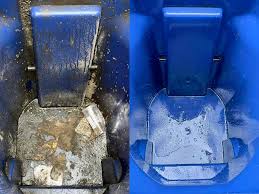
We use water heated to 190 degrees. That temperature breaks down grease and kills bacteria on contact. It doesn't just wash them into your driveway. Our equipment is fully self-contained, so none of that dirty runoff ends up on your lawn or in the storm drain.
So what does that mean for you? The smell goes away instead of just getting masked for a week.
Ready to get your bins cleaned?
Why Trash Can Sanitizing Is Essential for a Clean Home
The smell. This is the big one. Especially in summer, when the bin sits in the sun all week between pickups, the inside of your bin basically becomes a slow cooker.
The bugs. Our trash can sanitizing is essential to eliminate bugs and remove odor.
The animals. Raccoons, skunks and the occasional opossum are being attracted to your trash can because of the residue and smell coming from your bin. A clean bin is significantly less interesting to creatures and local wildlife.
The health piece. Germs like E. coli, salmonella and listeria all show up in residential trash cans.
The convenience. Most of our customers tried cleaning their own trash can once. It's so much easier to just leave it by the curb for us to clean after your trash pick up.
Signs Your Bin Needs Sanitizing Now
So how do you know it's time? Most folks wait until the smell hits them walking past the garage. But your nose isn't the only clue. Trash bins go through heat, rain, and weeks of leaking bags. That builds up fast in Rhode Island summers, when a hot driveway can turn a closed bin into an oven by early afternoon.
You smell it before you even lift the lid, even right after pickup
There's a sticky film or crust on the bottom you can't hose off
Flies or gnats circle the bin even when it's empty
You see dark streaks or mold spots near the seams
The smell follows the can, not just the trash, even on cleaning day
Here's a scenario we hear a lot. A homeowner in North Kingstown notices ants marching up the side of their bin every few days, even though they rinse it out with the hose. That's usually old bacteria hiding in the plastic grooves, not new trash. A hose can't reach that. Hot water can.
We see this every week. Someone thinks their bin is fine because it looks okay from a few feet away. Look closer, though, and the grime is baked into the ridges near the hinges and wheels.
Often, the smell isn't coming from this week's trash at all. It's residue that's been building for months, sitting right there under the lid every time it opens.
If any of this sounds familiar, that's your sign. If you're not sure, that's common too. Most people don't know how bad it's gotten until it's clean.

When You Can Skip Professional Sanitizing
Not every dirty bin needs a professional. If your can gets rinsed out with a hose every week, and it's just holding regular household trash bagged up tight, you might be fine on your own for a while. A quick spray down after pickup, done right after the truck leaves, can hold off the worst of it. Some folks with brand new bins, or a can that's only used seasonally, just don't have enough buildup yet to need a deep clean.
So how do you know you're still okay? Ask yourself a few things.
You bag everything before it goes in, no loose food scraps touching the plastic
You've rinsed the can within the last week and there's no standing liquid at the bottom
There's no smell when you lift the lid, even on a warm day
You haven't had maggots, flies swarming, or ants around the can
The can is used lightly, more recycling than food waste
If all that sounds like your situation, save your money for now. Most people who hose off their own bin are just moving the grime around, not killing what's growing in it. A garden hose doesn't get anywhere near hot enough to break down the bacterial film that builds up on plastic. Once you notice a smell that lingers after rinsing, or you see fruit flies showing up even with a clean lid, that's usually the sign the do-it-yourself approach has run its course. We hear this a lot. Folks think a quick spray is the same as a real clean; it isn't. If your bin still passes the sniff test and looks decent inside, there's no rush. Wait until it doesn't.
Our Service Areas
We proudly provide our premier bin cleaning services to communities across Southern Rhode Island. Check if we're in your neighborhood!
Warwick
Narragansett
Newport
North Kingstown
Westerly
South Kingstown
Jamestown
Charlestown
East Greenwich
How Professional Bin Sanitizing Works
Here's what people picture when they hear bin cleaning: a guy with a garden hose, maybe some dish soap. That's not what we do. Trash can sanitizing with real equipment means hot water, real pressure, and a process built to kill what's living in your bin, not just rinse it around.
Our truck carries a bin blasting machine that heats water up to 190 degrees. That's hot enough to break down grease, cut through slime, and knock out the bacteria that a cold hose just pushes around. We roll up on your regular trash day, so you don't have to remember anything or change your routine.
We pull your bin from the curb right after pickup, while it's already empty.
The bin gets locked into our equipment so nothing tips or spills.
High heat water blasts the inside walls and floor, breaking up caked-on grime.
The same pass hits the exterior, so lids and handles get scrubbed too.
Every drop of that dirty runoff gets captured by the machine, none of it hits your driveway or the storm drain.
We return the bin to the curb clean and ready for next time.
That self-contained part matters more than folks realize. Grease and bacteria washed straight into the street would just run into a storm drain somewhere. Our setup keeps all of it contained, so your property stays spotless and nothing ends up where it shouldn't.
When someone sees the water coming off their bin for the first time, they can't believe that's what's been sitting a few feet from their back door.
What to Ask Before Booking a Bin Cleaning Plan
So you've decided your bins need real help. Before you book anyone, ask a few questions first. Not every bin cleaning outfit works the same way, and the differences matter more than you'd think.
Pricing in this industry usually comes down to a few things: how often you want service, how many bins you have, and whether it's a one-time job or an ongoing plan. Most companies charge less per visit when you sign up for a recurring schedule versus a single cleaning. That's standard across the trade. Ask how billing works before your first appointment, not after.
What water temperature does your equipment reach? Cold water and a garden hose won't kill bacteria the way hot water does.
s the wastewater contained, or does it run into my driveway or the storm drain?
Do you clean the outside of the bin too, or just the inside?
How does scheduling work around my regular trash pickup day?
Can I do a one-time cleaning first before committing to monthly or quarterly service?
That runoff question is a big one. A lot of homeowners don't realize where the dirty water goes once a bin gets rinsed out. Our process is fully self-contained, so nothing ends up pooling in your driveway or running down the street. That's not just a nice touch; it's the difference between a clean job and a mess you have to deal with after the crew leaves.
Ask about deodorizing too. Rinsing a bin and deodorizing one are two different jobs; some companies only do the first

Rhode Island's Trusted Bin Cleaning
Experts
Frequently Asked Questions
How often should I get my trash can sanitized in North Kingstown?
Most homes do well with a cleaning every month during warmer stretches. North Kingstown summers get humid near the bay, and that moisture sits inside a closed bin long after pickup. That speeds up bacteria growth. If you notice smell, flies, or a sticky film even after rinsing, that's your sign it's time again. Lighter households with mostly recycling can often stretch that out longer.
Will sanitizing get rid of the smell for good?
Yes, because the smell comes from bacteria breeding in the ridges and seams, not just leftover trash. A hose rinse only moves that grime around. Water heated to 190 degrees breaks down the grease and kills what's causing the odor on contact. Most people who tried spraying it down themselves see the smell return within a day or two. Real heat is what makes it stay gone.
Do I need to be home when the bin gets cleaned?
No, you don't need to be home for us to sanitize your bin. We pull it from the curb right after your regular pickup, while it's already empty, and return it clean once we're done. You don't have to remember a special day or change your routine. Just leave the bin out like normal on trash day and we'll handle the rest.
Is the dirty water from cleaning going to mess up my driveway or yard?
No, our equipment is fully self-contained, so none of that runoff touches your driveway or storm drain. The bin locks into the machine while it gets blasted with hot water, and every bit of the grease and grime gets captured inside. That matters in North Kingstown where storm drains lead straight to local waterways. You get a clean bin without a mess left behind.
Why do I keep seeing ants or flies around my bin even though I rinse it every week?
That usually means old bacteria is hiding in the plastic grooves, not new trash sitting in there. A garden hose can't reach it because it doesn't get hot enough to break down that buildup. We see this a lot with bins that look fine from a few feet away but have grime baked into the ridges near the hinges and wheels. Hot water sanitizing reaches what a hose leaves behind.
Can I skip professional cleaning if I just rinse my bin myself?
Yes, if you bag everything tightly and rinse the can weekly with no lingering smell or pests. Lightly used bins, especially ones with mostly recycling, often don't need a deep clean yet. Once you notice odor after rinsing or fruit flies showing up around a clean lid, that's usually the sign your DIY routine has run its course. Until then, there's no rush to book a sanitizing visit.
North Bin Blasting LLC is a professional trash bin cleaning service dedicated to keeping your cans fresh, sanitized, and odor-free.

Quick Links
Business Hours
Mon - Fri: 7:00 AM - 7:00 PM
Sat: 7:00 AM - 7:00 PM
Sun: Closed
© 2026 North Bin Blasting. All rights reserved. | Terms & Conditions | Privacy Policy
Site by Ashley Brown Marketing